
Climate change affects more than the environment.
In Kenya's Arid and Semi-Arid Lands (ASALs), climate change reshapes how families access water, prepare meals, care for children, earn a living, and stay safe. Women and girls carry much of this burden through unpaid care work while facing increased risks of gender-based violence and limited access to clean energy.
Sauti Salama's Integrating Care and Climate for GBV Prevention in Kenya project responds to these interconnected challenges by placing care at the centre of climate action. Implemented in Kitui and Isiolo Counties, the project combines climate education, women's economic empowerment, renewable energy, and community leadership to strengthen resilience while creating safer, healthier households.
Supported by Fundación Avina through the International Development Research Centre (IDRC), the project demonstrates that investments in clean energy can improve household wellbeing, reduce environmental impact, and strengthen community systems that protect women and girls.
We believe climate resilience begins at home.
Rather than treating climate change, energy access, care work, and gender-based violence as separate issues, the project addresses them as interconnected realities that shape everyday life in ASAL communities.
Climate Literacy
Building community understanding of climate change, adaptation, environmental stewardship, and locally led resilience.
Care Systems
Recognising and strengthening the unpaid care work carried by women and girls while promoting shared responsibility and community support systems.
Clean Energy
Increasing access to renewable household energy solutions that improve safety, reduce indoor air pollution, and lower dependence on fossil fuels.
Women's Leadership & Livelihoods
Supporting women through entrepreneurship training, renewable energy knowledge, and community leadership to strengthen household resilience.
Kitui & Isiolo Counties
- Tumbuni and Ukasi, Kitui County
- Gotu Ward, Isiolo County
These communities experience recurrent drought, energy poverty, climate-related livelihood challenges, and limited access to essential services.
Community Training
We trained women and community leaders to strengthen local capacity for climate resilience.
Kitui County
Women trained on entrepreneurship, household resilience, and climate-informed livelihoods.
Isiolo County
Women trained on renewable energy, clean household energy, and sustainable energy practices.
Community Leadership
Community Captains trained to support community mobilisation, climate awareness, referral pathways, and local resilience efforts.
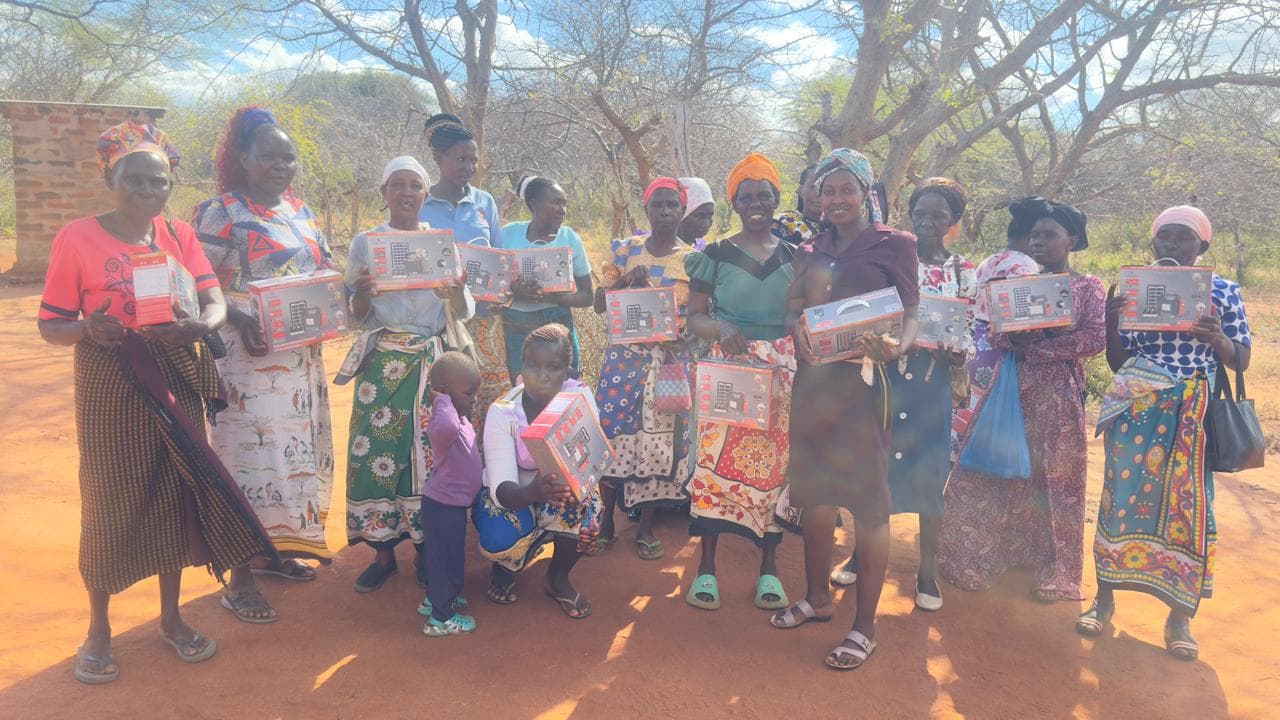
200 household solar lighting systems distributed across Kitui and Isiolo Counties.
Each vulnerable household received a portable solar lighting system equipped with:
- Solar charging panel
- Rechargeable battery
- Multiple LED lights
- Mobile phone charging
- Integrated radio
These systems provide a clean alternative to kerosene lamps, candles, and disposable battery-powered lighting.

Access to reliable lighting changes everyday life.
Clean energy also strengthens the conditions under which care is provided, making caregiving safer, healthier, and more dignified.
- Prepare meals safely after sunset.
- Support children's evening study.
- Reduce exposure to smoke from kerosene lamps.
- Lower household energy costs.
- Charge mobile phones at home.
- Improve safety around the household at night.
- Reduce reliance on carbon-intensive lighting sources.
Clean energy is not only a climate solution — it is an investment in care, dignity, and community wellbeing.
Women and girls often spend long hours managing household responsibilities while navigating unsafe environments after dark. By improving household lighting and access to renewable energy, the project contributes to:
Community ownership has been central throughout implementation.
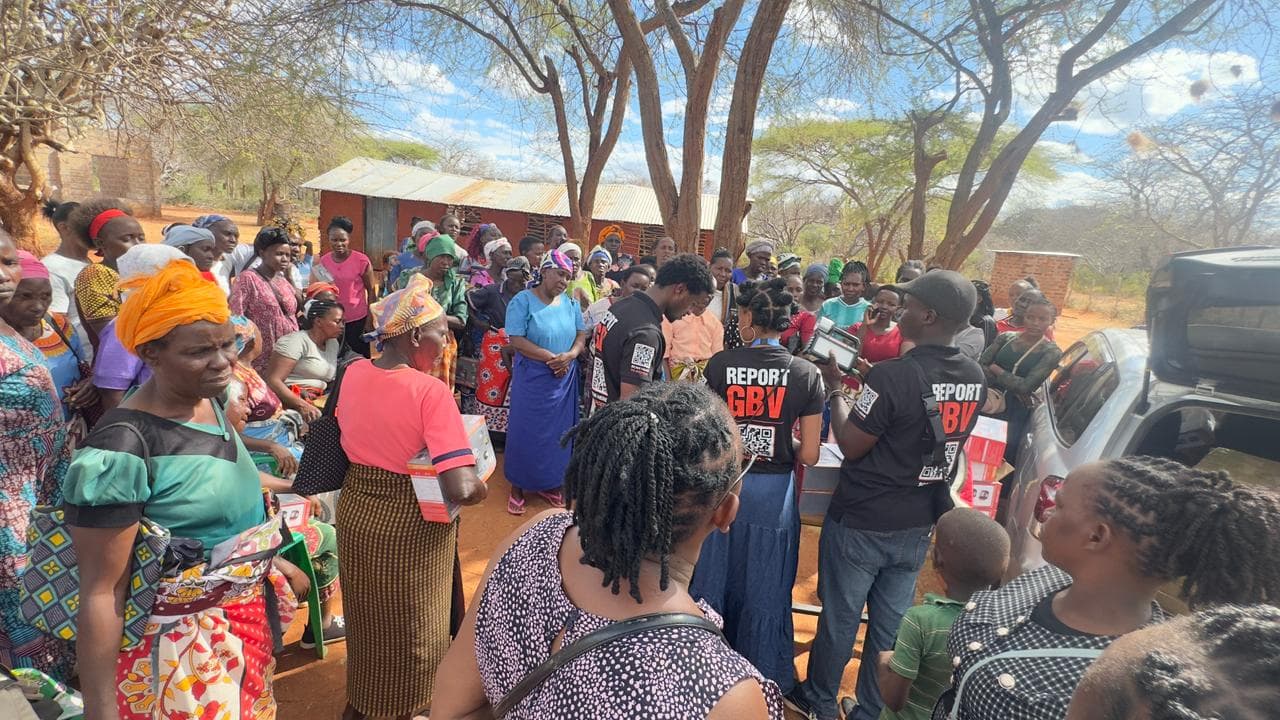
Working alongside Community Captains, local administration, Northern Vision, and community volunteers, the project adopted a participatory approach to:
- Community mobilisation
- Beneficiary verification
- Household selection
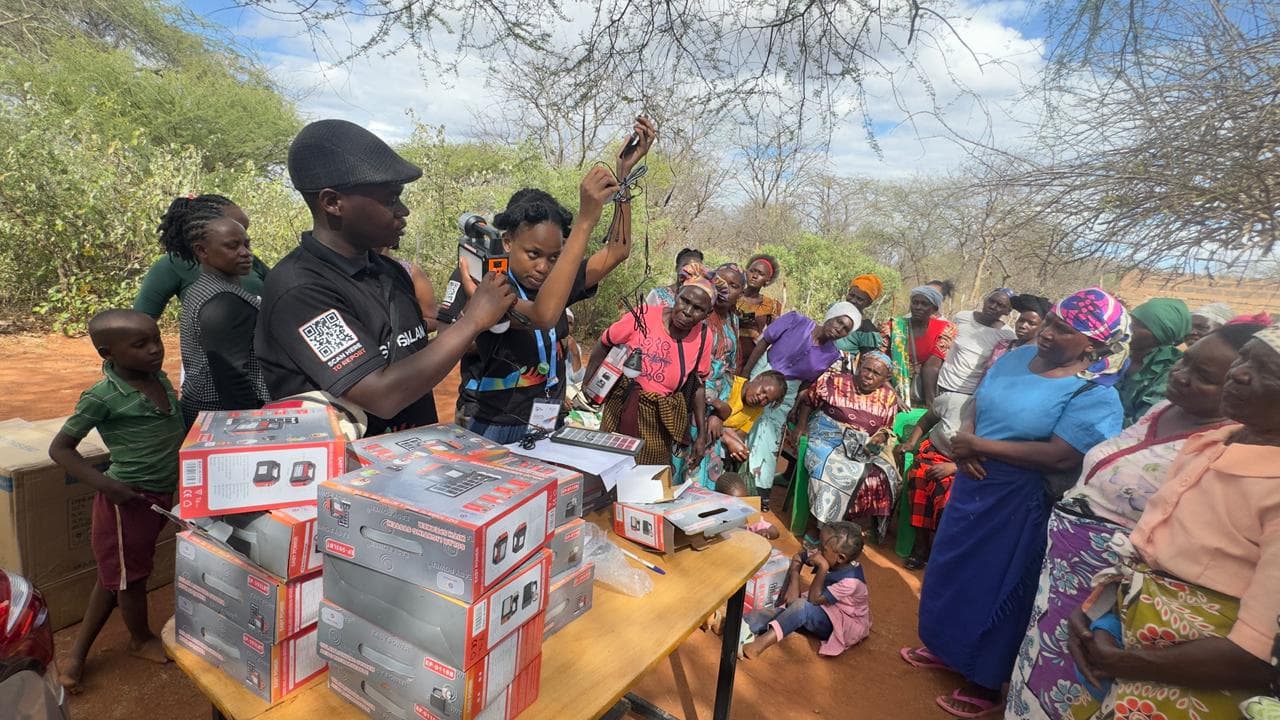
- Renewable energy demonstrations
- Solar lighting distribution
- Community follow-up
This collaborative model strengthened transparency, accountability, and local ownership of project activities.
Project Impact
“As evening fell in Tumbuni, children gathered around their new solar light to complete their homework while their mother prepared dinner under bright, smoke-free lighting.”
For the family, the solar lighting system represented more than electricity. It created a safer home, reduced the cost of buying kerosene, improved study conditions for children, and made evening caregiving easier. Across Kitui and Isiolo, similar stories continue to demonstrate how access to clean energy strengthens both climate resilience and everyday care.
Building evidence for care-centred climate solutions.
This project marks an important step toward building evidence on the relationship between climate resilience, unpaid care work, renewable energy, and gender-based violence prevention. Sauti Salama will continue working with communities, local partners, and researchers to strengthen care-centred climate solutions that improve the lives of women, girls, and families across Kenya's ASAL regions.
- Implemented by
- Sauti Salama
- Supported by
- Fundación Avina
- With funding from
- Climate and Care Initiative
- Implementation Partners
- Northern Vision, Savanna Kitui, Women Empowerment Fund, KCB Mwingi, Government of Kenya